E.g. “Yamaha Kodiak”, “Can-Am Outlander”, “Kawasaki Brute Force”
3 of 3 selected: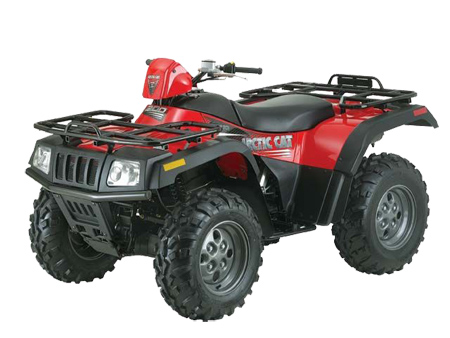 Arctic Cat 300 2X4×
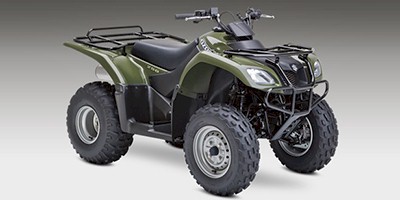 Suzuki Ozark 250×
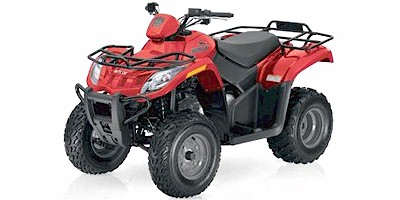 Arctic Cat 250 2x4 Auto×
Key Specs at a Glance
Engine
280cc / Unknown
246 / 15.01
249cc / 15.19
Full Specifications
| × Remove | × Remove | × Remove |
|---|
| Engine Spec |
|---|
| Engine Detail | 280cc, air and oil-cooled, 4-stroke, 2-valve, overhead cam ✓ | – | SOHC, 4-stroke, 2-valve |
|---|
| Exterior - Safety and Design |
|---|
| Front Fender | – | Standard | Standard |
|---|
| Front Fender Flairs | – | Standard | Standard |
|---|
| Front Bumper | – | Standard | Standard |
|---|
| Frame | – | Steel | Steel |
|---|
| Folding Foot Pegs | – | No | No |
|---|
| Foot Peg Location | – | Driver | – |
|---|
| Floor Board Location | – | Driver | Driver |
|---|
| Brush Guard | – | Yes | Yes |
|---|
| Body Material | – | Plastic | Plastic |
|---|
| Bash Plate (Rear) | – | No | – |
|---|
| Bash Plate (Front) | – | Yes | Yes |
|---|
| Colours |
|---|
| Metallic | – | No | No |
|---|
| Lighting |
|---|
| Halogen Headlights | – | Standard | Standard |
|---|
| Headlights | – | Standard | Standard |
|---|
| Lighting | – | Halogen | Halogen |
|---|
| Seats |
|---|
| Seat Adjustable | – | No | No |
|---|
| Seat Type | – | One-Piece | One-Piece |
|---|
| Seat Material | – | Vinyl | Vinyl |
|---|
| Seat Location | – | Driver | Driver |
|---|
| Number Of Seats | – | 1 | 1 |
|---|
| Seat Height (mm / in.) | – | 785 / 30.9 ✓ | – |
|---|
| Storage |
|---|
| Underseat Storage | – | Standard | Standard |
|---|
| Racks and Payload |
|---|
| Rear Rack | – | Standard | – |
|---|
| Front Rack | – | Standard | – |
|---|
| Tires and Rims |
|---|
| Rear Solid Axle | – | Yes | Yes |
|---|
| Exterior - Safety and Design |
|---|
| Front Stabilizer Bar | – | No | – |
|---|
| Tires and Rims |
|---|
| Rim Material | – | Steel | Steel |
|---|
| Exterior - Safety and Design |
|---|
| Full Length Skid Plate | – | Yes | – |
|---|
| Light Guard | – | No | No |
|---|
| CV Boot Cover | – | – | No |
|---|
| Instrumentation |
|---|
| Temperature Warning Type | – | – | Gauge |
|---|
| Speedometer | – | – | Standard |
|---|
| Fuel Level Warning Type | – | – | Gauge |
|---|
| Clock | – | – | Standard |
|---|
| Trip Odometer | – | – | Standard |
|---|
| Digital Instrumentation | – | – | Standard |
|---|
| Towing |
|---|
| Tow Hook | – | – | Standard |
|---|
| Storage |
|---|
| Storage Capacity (Kg / Lbs.) | – | – | 22.7 / 50 |
|---|
| Tires and Rims |
|---|
| Rear Rim Width (in) | – | – | 8 ✓ |
|---|
| Front Rim Width (in) | – | – | 6 ✓ |
|---|
| Transmission (Gearbox) and Final Drive |
|---|
| Primary Drive Engine / Transmission | – | – | Belt |
|---|
| Transmission Make | – | – | Duramatic |
|---|
| Suspension |
|---|
| Swing Arm Skid Plate | – | – | No |
|---|
| A-Arm Skid Plate (Front) | – | – | No |
|---|
| Engine Spec |
|---|
| Displacement To Weight CC | – | – | 0.52 |
|---|
| Manufacturer and Warranty |
|---|
| Parent Company | – | Suzuki | Arctic Cat |
|---|
| Recommend Minimum Age | – | 16 | 16 |
|---|
| Manufacturer Country | – | Japan | USA |
|---|
| Steering |
|---|
| Steering Type | – | Manual | Manual |
|---|
| Exterior - Safety and Design |
|---|
| Shock Cover | – | No | No |
|---|
| Rear Stabilizer Bar | – | No | No |
|---|
| Rear Fender Flairs | – | Standard | Standard |
|---|
| Rear Fender | – | Standard | Standard |
|---|
| Radiator Guard | – | Yes | – |
|---|
| Hand Grips | – | Standard | Standard |
|---|
| Tires and Rims |
|---|
| Rear Rim Diameter (in) | – | 9 | 10 ✓ |
|---|
| Rear Tire Width (in) | – | 10 | 10 |
|---|
| Rear Tire Diameter (in) | – | 22 | 22 |
|---|
| Engine Spec |
|---|
| Bore Stroke(in) | – | 2.6in. x 2.84in. | 2.86in. x 2.36in. |
|---|
| Bore Stroke(mm) | – | 66mm x 72mm ✓ | 72.7mm x 60mm |
|---|
| Total Valves | – | 2 | 2 |
|---|
| Valve Configuration | – | 2-valves | 2-valve |
|---|
| Towing |
|---|
| Towing Capacity (Kg / Lbs.) | 381 / 840 ✓ | 330.2 / 728 | 227 / 500 |
|---|
| Racks and Payload |
|---|
| Rack Capacity Rear (Kg / Lbs.) | 68 / 150 ✓ | – | 45 / 100 |
|---|
| Rack Capacity Front (Kg / Lbs.) | 34 / 75 ✓ | – | 23 / 50 |
|---|
| Fuel |
|---|
| Fuel Tank Capacity (l / gal.) | 16 / 4.25 ✓ | 9.7 / 2.6 | 13 / 3.43 |
|---|
| Tires and Rims |
|---|
| Tires Rear | 25 x 10-12, (4psi) ✓ | Dunlop AT 22 X 10-9 | 22 x 10-10 |
|---|
| Tires Front | 23 x 8-12, (6.0 psi) ✓ | Dunlop AT 22 X 7-11 | 22 x 7-10 |
|---|
| Dimensions and Weight |
|---|
| Dry Weight (Kg / Lbs.) | 249 / 550 ✓ | – | 216.4 / 477 |
|---|
| Wheelbase (mm / in.) | 1270 / 50.0 | 1140 / 44.9 ✓ | 1178.6 / 46.4 |
|---|
| Ground Clearance (mm / in.) | 203 / 8.0 | 211 / 8.3 ✓ | 259.1 / 10.2 |
|---|
| Height (mm / in.) | 1143 / 45.0 | 1069 / 42.1 ✓ | 1118 / 44 |
|---|
| Width (mm / in.) | 1143 / 45.0 | 1044 / 41.1 ✓ | 1052 / 41.4 |
|---|
| Length (mm / in.) | 2019 / 79.5 | 1801 / 70.92 ✓ | 1869 / 73.6 |
|---|
| Suspension |
|---|
| Suspension Rear | Independent double A-arm, 6.5" (16.5) of travel | Swing Arm | Swing arm; 5 in. travel ✓ |
|---|
| Front Suspension | Independent double A-arm, 6.5" (16.5) of travel | Independent Double A-Arm | Double A-arm; 5 in. travel ✓ |
|---|
| Brakes |
|---|
| Brakes Rear | Hydraulic disc, single-lever actuated | Drum | Hydraulic Disc |
|---|
| Brakes Front | Hydraulic disc, single-lever actuated, with parking brake. Foot operated mechanical rear brake, | Dual Hydraulic Disc | Hydraulic Disc |
|---|
| Engine Spec |
|---|
| Engine Cylinders | single-cylinder | Single-Cylinder | Single-Cylinder |
|---|
| Engine Cooling | air and oil-cooled | Air | Liquid-Cooled with fan |
|---|
| Engine Type | 4-stroke | 4-Stroke | 4-stroke |
|---|
| Engine Valves | 2-valve,overhead cam ✓ | SOHC | SOHC |
|---|
| Engine Capacity (cc / Ci ) | 280cc / Unknown ✓ | 246 / 15.01 | 249cc / 15.19 |
|---|
| Compression Ratio | – | 9.2:1 | – |
|---|
| Fuel System | – | Carburetor | Carburetor |
|---|
| Fuel System Brand | – | Mikuni | – |
|---|
| Carburetor Size MM | – | 29 ✓ | – |
|---|
| Tires and Rims |
|---|
| Front Rim Diameter (in) | – | 11 ✓ | 10 |
|---|
| Front Tire Width (in) | – | 7 | 7 |
|---|
| Front Tire Diameter (in) | – | 22 | 22 |
|---|
| Tire Make | – | Dunlop | – |
|---|
| Transmission (Gearbox) and Final Drive |
|---|
| Reverse | – | Yes | Yes |
|---|
| Number Of Speeds | – | 5 ✓ | – |
|---|
| Hi / Low Range | – | No | Yes |
|---|
| Primary Drive - Rear Wheels | – | Shaft | Shaft |
|---|
| Drive line Modes | – | 1 | 1 |
|---|
| Final Drive | – | 4X2 | 4X2 |
|---|
| Transmission | – | Manual / Automatic Clutch | Continuously Variable (CVT) |
|---|
| Dimensions and Weight |
|---|
| Wet Weight (Lbs. / Kg) | – | 428 / 194 ✓ | – |
|---|
| Exterior - Safety and Design |
|---|
| Hand Guards | – | – | No |
|---|
| Suspension |
|---|
| Air Adjustable | – | No | No |
|---|
| Rear Adjustable Shock Spring Pre-Load | – | No | Yes |
|---|
| Rear Adjustable Rebound Damping | – | No | No |
|---|
| Rear Travel (mm / in.) | – | 140 / 5.5 ✓ | 127 / 5 |
|---|
| A-Arm Skid Plate (Rear) | – | No | No |
|---|
| Suspension Rear - Material | – | Steel | Steel |
|---|
| Front Adjustable Rebound Damping | – | No | No |
|---|
| Front Adjustable Fork Pre-Load | – | No | Yes |
|---|
| Suspension - Front Travel (mm / in.) | – | 140 / 5.5 ✓ | 127 / 5 |
|---|
| Brakes |
|---|
| Front Brake Diameter (mm / in.) | – | 160 / 6.3 ✓ | – |
|---|
| Engine Spec |
|---|
| Ignition | – | Electric / Pull | Electric / Pull |
|---|
| Fuel Type | – | Petrol | Petrol |
|---|
| Carborator Count | – | 1 ✓ | – |
|---|
| Suspension |
|---|
| Number of Rear Shock Absorbers | – | 1 | 1 |
|---|
| Manufacturer and Warranty |
|---|
| Warranty Info | – | – | 6 Limited ✓ |
|---|
Clear all & start over
Pros & Cons
✓ Pros
- Largest engine in this comparison (280cccc)
- Lightest of the group — easier to manoeuvre
- Highest rated towing capacity (381kg)
- Independent front suspension for better ride comfort
✗ Cons
- No significant weaknesses identified from available data
✓ Pros
- Best ground clearance — handles rough terrain well
- Independent front suspension for better ride comfort
- Manual gearbox — greater control in technical terrain
- Lower seat height — more accessible for shorter riders
✗ Cons
- Smaller engine than the 1999 Arctic Cat 300 2X4
- 2WD only — less traction off-road than 4WD alternatives
✓ Pros
- Independent front suspension for better ride comfort
- Disc brakes front and rear — strong stopping power
- CVT automatic transmission — easy to ride, no gear-changing
✗ Cons
- Smaller engine than the 1999 Arctic Cat 300 2X4
- Heavier than the 1999 Arctic Cat 300 2X4
- 2WD only — less traction off-road than 4WD alternatives
Comparing 1999 Arctic Cat 300 2X4 vs 2013 Suzuki Ozark 250 vs 2008 Arctic Cat 250 2x4 Auto — Common Questions
Which has the most powerful engine?
The 1999 Arctic Cat 300 2X4 has the largest displacement at 280cccc, making it the most powerful in this comparison. A larger engine generally means more torque for towing and off-road work.
Which quad is the lightest?
The 1999 Arctic Cat 300 2X4 is the lightest at 249kg (dry weight). A lighter quad is easier to manoeuvre on trails and simpler to recover if stuck.
Which is best for farm work and towing?
For heavy farm use the 1999 Arctic Cat 300 2X4 has the highest towing capacity at 381kg. For general farm duties any quad with 4WD and a towing rating above 400kg is suitable for light implements, spray rigs and game-reserve work.
Which has the better suspension?
Independent front suspension (A-Arm or IFS) absorbs bumps better than solid-axle designs and improves handling on uneven terrain. Check the Suspension category in the full table above to compare front and rear travel for each model.
Which is the easiest to ride?
CVT automatic transmission is easiest for beginners — there is no gear-changing or clutch to manage. A lower seat height also makes a quad more accessible for shorter riders. Check the Transmission and Seat Height rows in the table above.
Advertisement